
An Interview with Quincy Larson: From the very beginning I wanted to make freeCodeCamp open source

When open source meets education, it can spark countless possibilities — and freeCodeCamp stands out as one of the brightest. Founded in 2014, this free online coding platform has welcomed over a million learners from across the globe. Many had never written a single line of code before: they may have been soldiers who had just left the service, cashiers at small grocery stores, or gas station attendants. By learning to code, they not only kept pace with the digital era but also rewrote the course of their own lives. All of this traces back to one man’s vision — Quincy Larson, founder of freeCodeCamp.
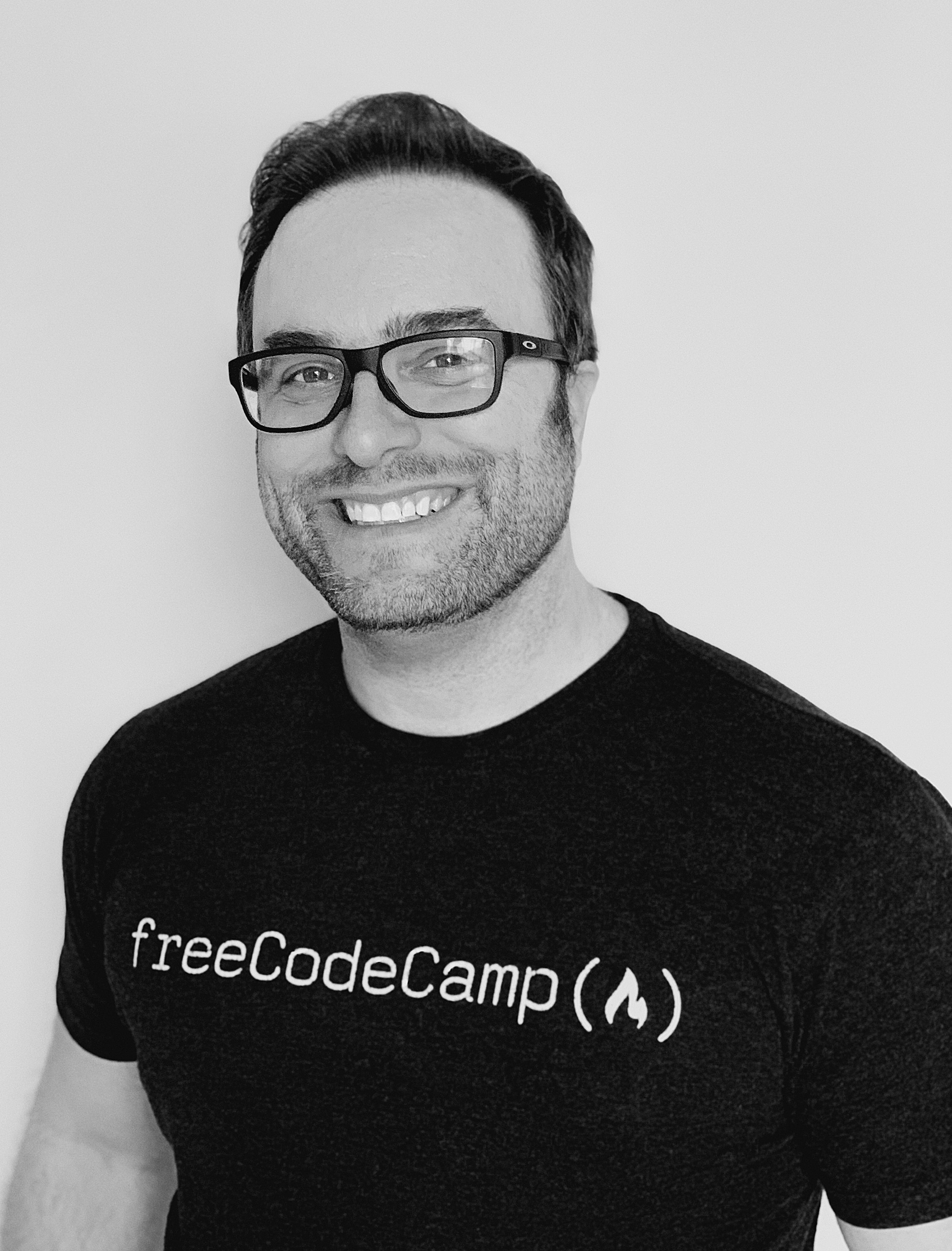
Quincy Larson
Quincy didn’t start learning programming until his thirties. At the time, he was a director at a language school and noticed that the teachers around him spent a lot of time doing menial back-office tasks, such as filling out grade reports, immigration paperwork, and attendance sheets. To lighten their workload, he started learning basic programming skills on his own and took over those tasks, freeing the teachers to focus on teaching. This experience showed him just how powerful programming could be and inspired him to build a school management system.
Immersed in textbooks, free online courses from top universities, and countless lines of code, Quincy pushed himself hard. Almost every weekend, he joined hackathons, testing his skills and growing as a developer. Just nine months later, his hard work paid off when he landed an entry-level developer role — marking the start of a new chapter in his life.
After becoming a developer, Quincy’s vision evolved. While his initial goal was to create a school management system, he soon realized that by helping more people like himself learn to program, they could do much more than build better tools — they could create innovative products that drive social progress and even launch entirely new industries.
That realization gave birth to freeCodeCamp, which is completely open source, with no ads or sales pitches, thriving through the collective passion of its community. From day one, Quincy has committed to making all courses, source code, and learning resources open and free to all. Here, learning and contributing go together: you can learn programming by solving interactive coding challenges, or join as a dedicated volunteer by doing translations, fixing bugs, improving features, and supporting fellow learners.
Eleven years have passed, and freeCodeCamp has grown into a popular online education platform that offers thousands of coding lessons. But Quincy’s core vision has never changed: to keep the platform nonprofit and fully open source, making coding education accessible to all. To him, education is a right, not a privilege — open to anyone regardless of their origin or past. And nothing is more meaningful than witnessing every learner’s life being transformed by the power of coding. “Whenever someone tells me that freeCodeCamp has had a profound impact on their life, their family’s well-being and their income, that’s definitely the high point of my life ,” he says.
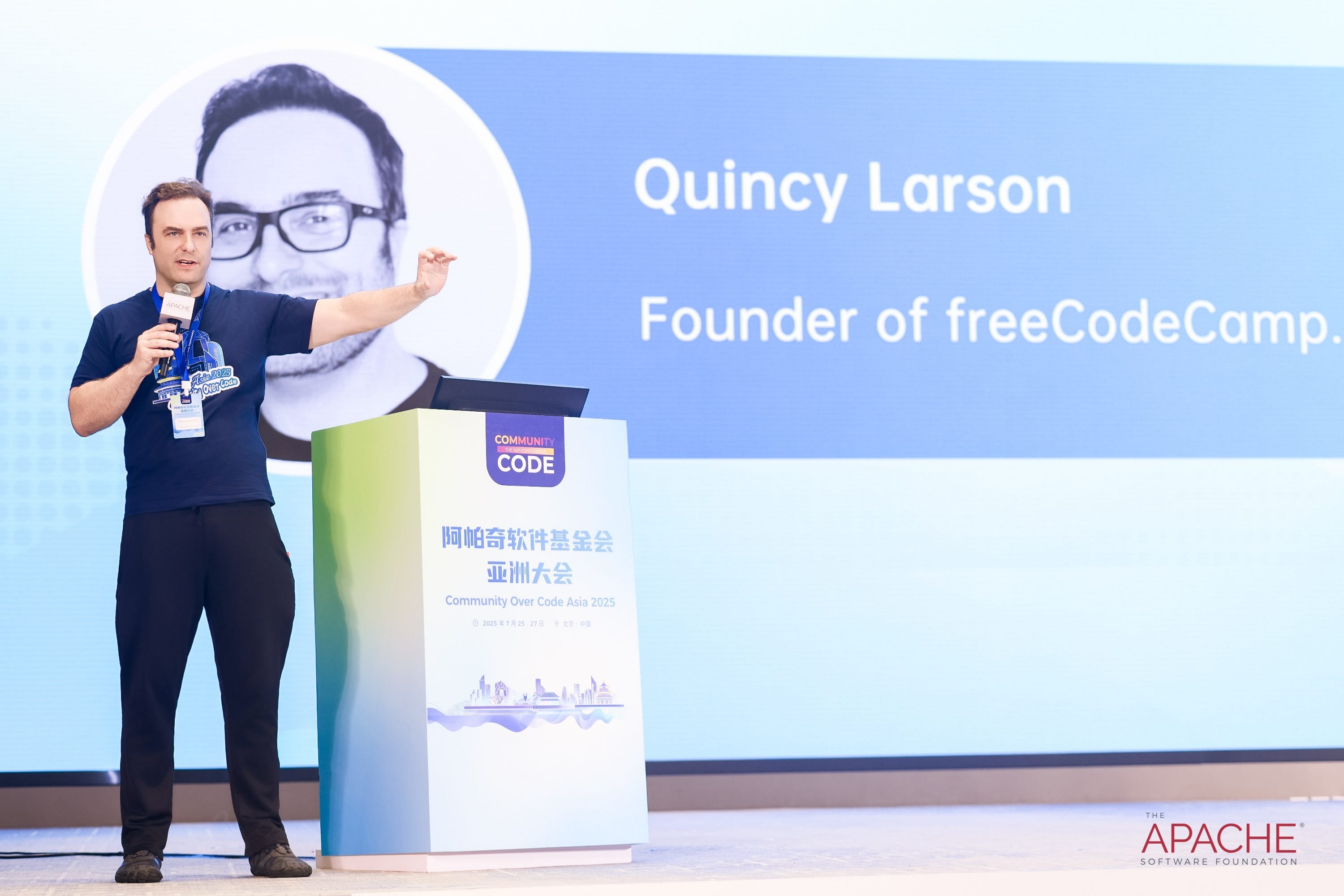
Quincy at the ASF’s “Community Over Code Asia 2025”
At the Apache Software Foundation’s “Community Over Code Asia 2025” conference, right after his keynote speech, we sat down with Quincy for an interview. Below is the transcript of our conversation.
Open Source and freeCodeCamp
Richard: Today, we are honored to have Quincy Larson, the founder of freeCodeCamp, join us at the Apache Software Foundation’s conference “Community Over Code Asia 2025”. After hearing Quincy’s keynote speech just now, we are fortunate to have the opportunity to conduct an interview with him. This interview is a collaboration between Kaiyuanshe and The Nexus, and we hope that everyone will gain a better understanding of the spirit of freeCodeCamp and open source (whether through video or written format).
Alex: Since our topic here is open source, Quincy, can you share your journey into open source?
Quincy: Sure. I was very excited about open source just as a developer. From the very beginning I wanted to make my projects open source, because I believe that if you have an open source project, you potentially have a lot of people helping you. And when you’re a solo developer, it’s very hard to get things done, especially considering I was a teacher primarily, and I had only worked as a software engineer for a couple of years. I didn’t necessarily have the skills to build up a large scale platform by myself. And I wanted to keep it as a charity. So I didn’t want to have to go get a bunch of money from the money people in Silicon Valley so that I could hire developers to help me. I wanted to do open source. That way I can get developers to help me without having to raise funds. And once you get investment, you can’t really convert to a charity because your investors will not let you do that. You must not have any outstanding stock if you want to convert to a charity. So open source and charity are very aligned in their incentives. I think that’s why so many software projects that are charities are also open source, and many successful open source projects are also charities.
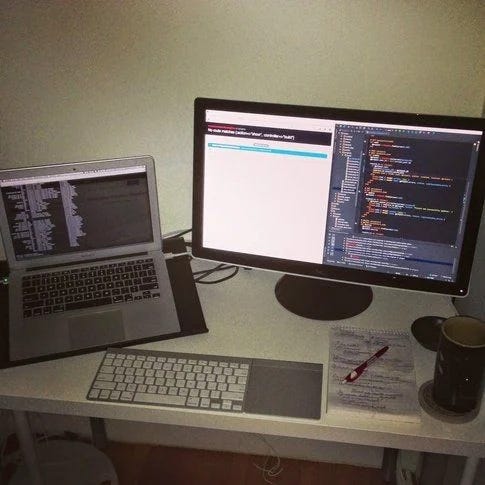
The desk in Quincy’s closet in San Francisco where he built the first version of freeCodeCamp
Alex: So what motivated you to start freeCodeCamp?
Quincy: I learned to program when I was in my 30s. Before that, I didn’t really know that much about technology, but I knew that learning programming would give me a lot of additional leverage and ability to get things done in the real world. So after learning it and seeing how useful programming was, it’s incredibly useful. You can get so much done. You can automate so much. You can make yourself so much more powerful if you can get a bunch of machines to work for you. That’s essentially what programming is: telling the machine what to do. So after I learned how to do that, I wanted to help older people who were no longer college-aged, who were already out of the workforce, and who could not go back to school. I wanted to give them resources they could use to learn programming online, and I wanted it to be free and self-paced. So anybody could do it regardless of their circumstances.
Alex: I think this is also the spirit of open source — sharing.
Quincy: Yeah, I mean there are lots of very smart people who are in the middle of a village in India, for example, and don’t have a lot of resources. They have no way of getting to Silicon Valley to try to work at a tech startup or to get investment. They’re stuck there. And maybe they don’t even have a laptop. Maybe they’re working on an old Android phone or something like that. And we wanted to make learning resources accessible to those people, too. So it really makes sense if you think about accessibility as the main means through which we accomplish our goal that is just making information and making learning resources more accessible to more people.
Alex: Thank you. Quincy, you’ve done so much for people who have very limited resources.
Quincy: Thank you for your kind words.
Alex: Can you share some experience about building a vibrant community?
Quincy: Yeah, I think it’s really interesting who comes forward and starts getting involved in open source projects. We had a variety of people from all over the world who got involved. And it was surprising like the types of people were very different. They came from many different countries. They had many different backgrounds. Some people were working in other fields, or maybe they got out of the military, or maybe they didn’t even go to university and they were working in a grocery store, just serving customers and helping them check out or something like that. And they learned the skills to program and they started contributing to our open source project.
So the thing that I discovered from building an open source community is you can’t predict. It’s not just going to be Stanford undergraduate students who are contributing to your project. It’s going to be anybody in the world. Anybody in theory can come and contribute to that project. So you don’t want to presuppose that it’s just going to be Americans contributing, or it’s just going to be Chinese contributing because you’re a Chinese project. It could literally be anybody if you do a good job of making it accessible and getting the word out through various channels like we use Reddit, Hacker News,Twitter and lots of different channels to try to raise awareness of the fact that we exist. You’ll get all kinds of people.
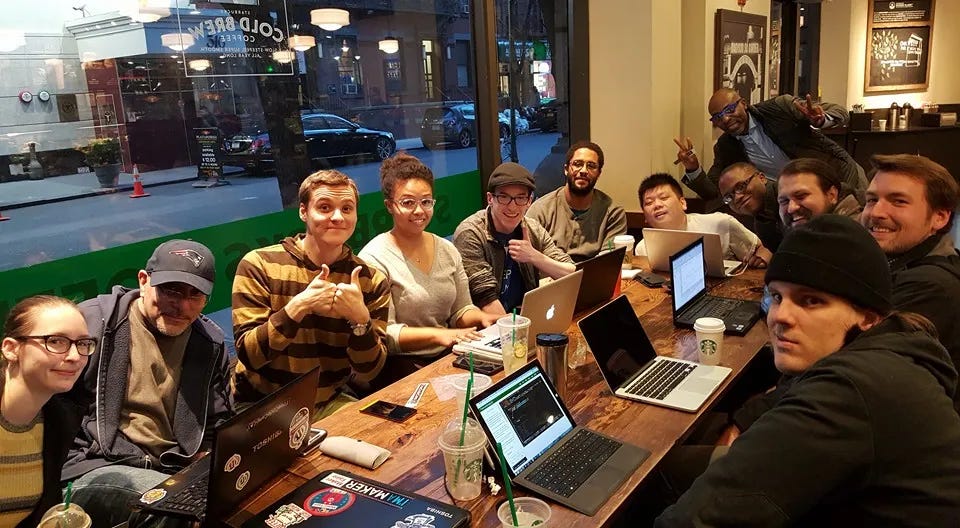
An early freeCodeCamp event in New York City
Alex: Yes, I think it’s amazing to see people from different backgrounds working together on the same thing.
Quincy: Yeah, 100 %.
Alex: Have you seen any challenges emerging when the community continues to grow? How do you handle those challenges?
Quincy: So the best way to handle it, in my humble opinion, is to systematically try to document everything and put everything in text form where you make it publicly accessible through your blog or through your documentation. We created contribute.freecodecamp.org, which is our entire onboard experience for open source contributors. That way everybody has access to the same information immediately, and anybody can read it and get an idea of what it’s like to contribute to freeCodeCamp, but they can decide whether it’s a good fit. That way we’re not onboarding a whole lot of people manually that maybe never contribute. We can just work on the actual tools to help people contribute instead of trying to help contributors directly. And everything is systematized. So maybe somebody comes in and they only contribute once or twice. That’s great. We still appreciate that. We have “Help Wanted” tags on a lot of our Github issues. We have a good first issue if somebody’s just getting into contributing to the project. So we’ve created all these systematic onramps for people to contribute to the project. And I think that works really well. The other thing we’ve done for the cohesion of the community is we have a very active Discord check where you can go in real time. You can talk to other people that are contributing to the project and get help, ask questions and just hang out and talk to people, learn more about the people who contribute to freeCodeCamp.
We have the discourse forum, which is forum.freecodecamp.org where people ask questions to get answers. And they can do this for like programming questions or getting feedback on their open source projects. Or if they just built a simple project for an assignment, they can get help or they can ask further questions. But one of the things they use that for is asking questions about the community. I noticed this. “Should we be doing something about this?” Like, or have you considered doing this and like lots of really good ideas just bubble up from the forum or from the Discord chat and ultimately become Github issues and pull requests and implemented features on freecodecamp.org.
Alex: So what’s the most rewarding thing about running a community?
Quincy: Yeah, absolutely. I would say the most rewarding thing is when I meet somebody, or somebody reaches out to me through LinkedIn or Twitter, or sends me an email and says:
“Hey, I just got a job as a developer.”
“No, I don’t have an undergraduate degree. I’m like 35 years old. I used freeCodeCamp and learned all these skills, and then I spent a whole lot of time building my reputation as a developer by putting my projects out there, building my portfolio.”
“I spent a lot of time going to events right in my city and meeting potential hiring managers — meeting people who could potentially recommend me to their company. I got the job. I got a job as a developer.”
Or people say things like:
“I started this project and now I’m making $2,000 a month from maintaining this service — like a software-as-a-service tool — or I’ve got some freelance clients. I used the skills I learned from freeCodeCamp, and now I have several clients that I’m helping, and I can leave my job working at the gas station or something like that.”
So those kinds of success stories are the best part by far. It’s great in theory that we’re putting all these learning resources out there, and I love it when people are like, “Yeah, I use it. It’s great. I learned a lot from it.” But it’s even more compelling when people say things like, “I had this really significant, profound impact on my life — my family’s well-being, my income, all that stuff.” So that is definitely the high point when somebody tells me those kinds of success stories.
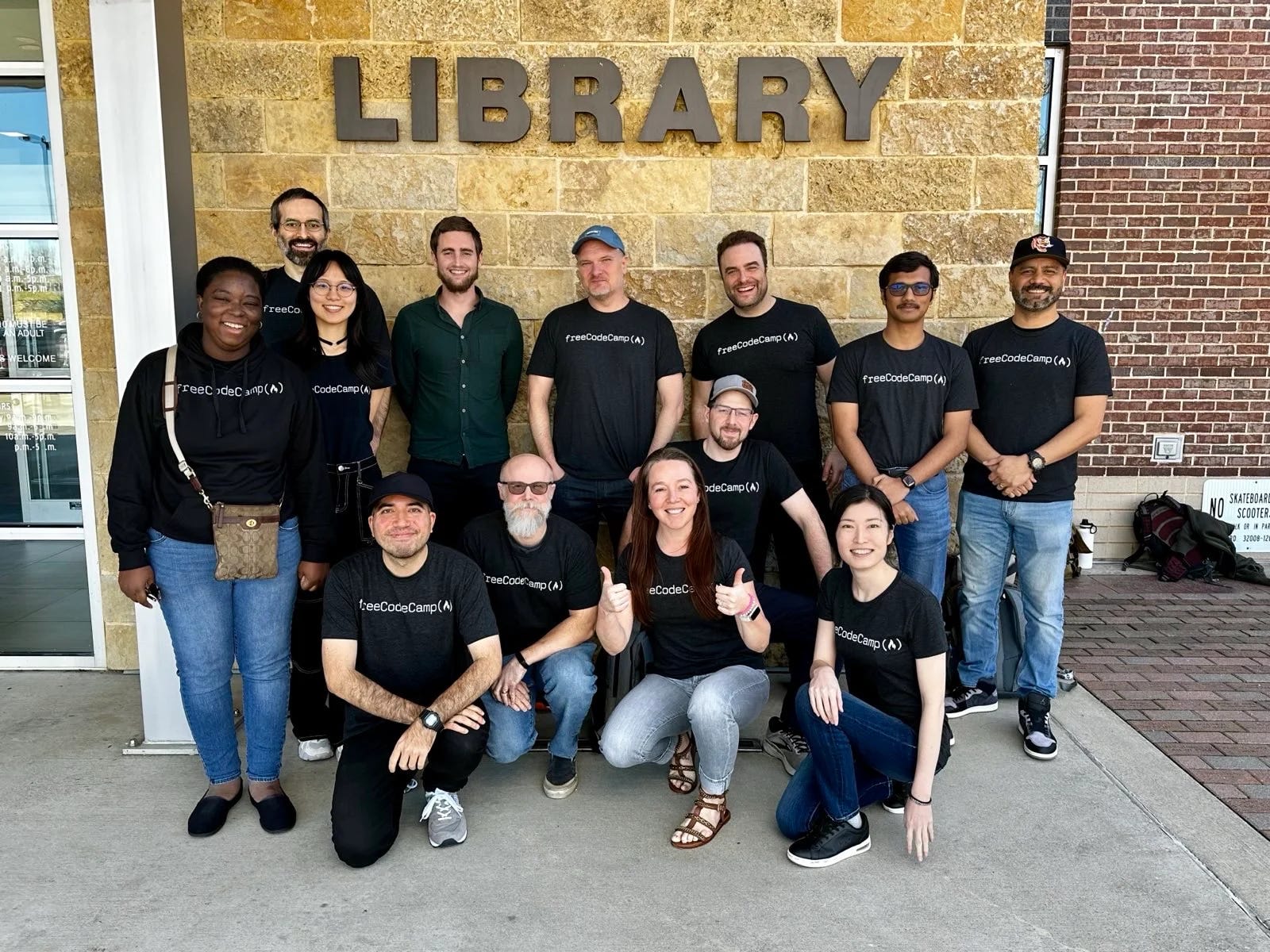
A picture of freeCodeCamp’s staff
Alex: Since freeCodeCamp is a nonprofit platform dedicated to teaching programming, how do you keep it running? And what kinds of support are you currently looking for the most?
Quincy: At first I just used my savings to pay for servers and other costs. About US $150,000 for the first 3 years. Once freeCodeCamp got tax-exempt status, we started getting monthly-recurring donations from members of the freeCodeCamp community. More than 10,000 people now donate to freeCodeCamp each month. Some of them give $5. Some of them give $20. It really adds up.
We also get small grants from companies like Google and Microsoft that we use to develop courses.
freeCodeCamp’s budget is quite small considering that millions of people use our curriculum each month. But it is enough for us to have a small paid staff and to pay for servers.
A Special Connection with China
Alex: I know you were in China, studying here, and your wife is Chinese. You are very close to China and Chinese people. So did your time in China influence your work and life later?
Quincy: Yeah, absolutely. I’ve learned a lot from my time in China and from the many Chinese people I’ve had the opportunity to work alongside and learn from. I think the biggest thing I’ve learned from Chinese people is that they tend to be much more patient than Americans. This is a generalization, but it’s positive. They are very patient and they will sit down and they will work on something for a very long time, very patiently. In the US I feel like sometimes people don’t get instant gratification or instant feedback when people aren’t immediately congratulating them. I feel like in the US maybe we’re too focused on immediate gratification to an extent. And that can impact our ability to do long term, big projects and to, I guess, invest more time and energy into something before giving up on it. So I learned a tremendous amount just from very long term thinking that is present here in China.
Alex: Do you have something to say to Chinese developers, maybe in Chinese? Maybe some good advice.
Quincy (Quincy answered in Chinese and this is a translation): My advice is — don’t give up. If you have an open source project, even if no one is using it yet, keep going. Don’t be afraid to say, “Hey, I’ve built something — come check it out, try it in your codebase.” Don’t be too shy. I’ve met developers who created a very useful part of some software, but no one ever knew that simply because they were too shy to say it out loud. So I want to encourage them to speak up, put their work out there, and let the world know what they’ve built.
Richard: Some people may think they are not good enough and choose not to show off.
Quincy: Yeah. They are self-defeating.
Alex: And in China we emphasize more on being modest.
Quincy: Yes, that is one thing you can learn from Americans: we are not modest; we are brash and outgoing generally.
Alex: But you are very confident. I think that’s a very good thing we can learn from you.
Quincy: I think if you actually have something good, if you actually have the skills, you should be confident. And I think in the US, maybe a lot of people are overconfident. But I think in some cases, many people outside the US are under confident. They’re actually way better than they believe. And I mean you want your confidence to be in line with your competence. If you can strike that balance, then that’s great. If you can talk big, but actually back it up with big actions and big projects and things like that. And then that’s fine. It’s okay to have a big, loud voice if you’re actually doing big things.
AI and Open Source Education
Alex: So next, we’ll talk about AI. You know vibe coding? What do you think of it? Like coding without thinking?
Quincy: I understand that you can write software that way. But the way that freeCodeCamp writes software is that we do use agents to write code, but we code review. We don’t just merge stuff without looking at it. I understand if you’re just building something really fun.
Richard: So you have already used agent tools to write code.
Quincy: Yeah, we do like agentic code generation. We will eventually move on to fleets of agents, and every dev on our team will be managing essentially like a hierarchy of agents. I think that is probably the future. How soon will it really be ready? It remains to be seen, but we’re already assuming that is the future. So we’ve already started doing that as a team. That said, I don’t think just anybody can start building robust software using agents. I think you do need to still actually learn how to program.
I know it’ll be so crazy, but I think it’s still correct. With the freeCodeCamp curriculum, it used to be very, very long. It was thousands of hours. Like let’s spend hundreds of hours learning how to write SQL queries and bash scripts, and learning all the ins and outs of software development, because a computer science degree is 4 years long; that’s a lot of work. And we wanted to emulate that and be similarly comprehensive. What we’re doing now is trying to figure out ways to shorten it a little bit, because I don’t think you need to program as well as you used to be able to, because you can rely a little bit on AI agents. And you just need to be able to. It’s easier to read code and make sure that it does what you expect than to necessarily come up with the code from scratch. So that is my assessment on what I call agentic coding. I don’t like to use vibe coding, because I think vibe coding really is just like merging stuff without looking at it, but we do agentic software development. I think that’s more likely to be the future than just straight up vibe coding.
Alex: As AI continues to advance, I mean one day people might not need to learn programming and they can just build things directly with AI, so how is freeCodeCamp responding to this shift?
Quincy: I don’t know how soon that will come, but we have already started diversifying into teaching world languages. Like we’re building a Spanish curriculum, we’re building a Chinese curriculum. We already have an English curriculum that’s quite long and comprehensive for people that want to improve their English. And we’re also going to be teaching a lot of other skills that a university would traditionally teach. We have a really powerful, kind of structured, interactive platform for teaching programming. So a lot of that can be pointed to teaching economics and like how to build models with spreadsheets, for example, or finance or other skills that people will use in their day to day lives.
So generally, if a university has a topic like a major in that field, that might be a field that we’re interested in moving into. And I think that being free and being interactive and being self-paced are the core aspects of freeCodeCamp.
Alex: Speaking of those courses on freeCodeCamp, what’s the most popular one?
Quincy: Right now, it’s python. Python is extremely popular. If you want to do machine learning, you should probably learn python. You could, in theory, do it with a javascript. But I think javascript and python are going to continue to be the most popular programming topics. And what you mentioned earlier about whether people need to learn programming in the future, If LLM can program complete code bases and stuff like that, I would argue they probably still do need to. I mean you could just download a spreadsheet that does calculations for you. You can put numbers into that, but the second you need to change that, you need to know how the spreadsheet works. It’s not an exact analogy, but like calculators have existed for 100 years, and we’re still learning how to do math mainly. I think it’s because just having a little bit of basic knowledge is extremely helpful in understanding and being able to reason about architectural decisions and things like that. We will probably step several layers of abstraction back when we teach programming, like we don’t necessarily teach memory management and garbage collector, like how to build your own garbage collector or compiler. You can teach those things, and a lot of computer science instructors would advocate teaching those things, but I’m totally fine just teaching scripting languages. I’m totally fine instead of teaching SQL, teaching how to use ORM — an object relationship mapper, right? Being a few layers of abstraction away from the metal.
Alex: Are there any new courses coming soon?
Quincy: Yeah, we publish new courses several times a week, like we published a new algorithm with data structures course two days ago. We’re publishing mostly video courses, and then we publish books. We publish free books on non-programming topics as well, such as Chess.
Alex: Last year you published a book, an audio book.
Quincy: I published my book, which — if you Google “learn to code book”— is probably the top result that has a bunch of ads on top of it. That book is How to Learn to Code and Get a Developer Job. It’s all around like strategies for learning these skills. And I will probably create an updated version, and I think not a whole lot has changed, but things are changing.
Alex: I think I’m going to read it because I also want to learn how to program.
Quincy: I will tell you, if you just want to learn the basics of programming, just go to freeCodeCamp and start at the top and work your way down. It is the shortest path to learn to program.
Alex: Definitely. I’m going to do that. The next question is about the future trends in open source education. In your opinion, what are the future trends in open source education?
Quincy: Open source education, if you include Creative Commons-licensed textbooks, there’s OpenStax project that has lots of textbooks on math, for example, and economics and things like that. And then freeCodeCamp creates free interactive resources. And then there are lots of people who write a book and make it creative commons for BY-SA 4.0 or maybe have a non-commercial restriction. So I would consider this kind of like open source. They’re not technically code, but they’re being put into the commons to an extent. Some things are put out like literally public domain. But I think that those works are going to be increasingly common. Now, a lot of that will be somewhat synthetic. It’ll be people using LLMs to write books and then publish them. I think they’re probably less useful than original insights, because LLMs can create novel stuff, like an LLM that’s powerful enough and thinks long enough could, in theory, create a new method theorem that improves upon previous work, right? That has happened before. People may be able to create new biomedical stuff with LLMs. But I think in terms of original thoughts and connecting stuff, it’ll probably be a while before a human can’t have more novel observations, before a human can’t more effectively teach a topic than an LLM can. Like I can have conversations all day with an LLM and learn a lot, but if I could talk to a human expert or somebody who had a PhD and had been doing research in the field, and if I can interview them on my podcasts, which I’ve done many times, I’ll learn way faster than just talk to LLMs, because they’ll have a much better idea like a theory of my mind, and like from having worked with a whole bunch of students, and they’ll have much more experience of teaching and things like that.
So I think teachers are committing their teaching capabilities to an artifact that scales. If you think about an open course, like a massive open online course or an open textbook, or an interactive course on freeCodeCamp or a YouTube video that is broken down into courses and has like Github repos and stuff that go along with it,I think you’re going to see more and more of them. freeCodeCamp, we’re going to do our best to just continue to propagate as many open learning resources as possible. Like my vision is, in the future, people don’t spend a lot of money on education. Maybe they spend on tutors, which I think are very valuable. Maybe they spend it on a really good degree program, but they wouldn’t be spending it on, like, some course that you spend $60 and you download it, the material and stuff like. I just don’t think that is the future. I think the future is: education is largely free; universities are pressured to reduce their tuition. And it becomes more accessible for everybody because of open source. That’s certainly what has happened in other aspects. Open source software like, if you look at the impact that Linux had, it’s dramatically reduced the cost of maintaining a bunch of servers you used to have to get licenses for different operating systems. The Apache Software Foundation, they maintain tons of different projects. They make it so much cheaper,if you’re trying to spend a bunch of servers that do a specific thing like open source load balances.
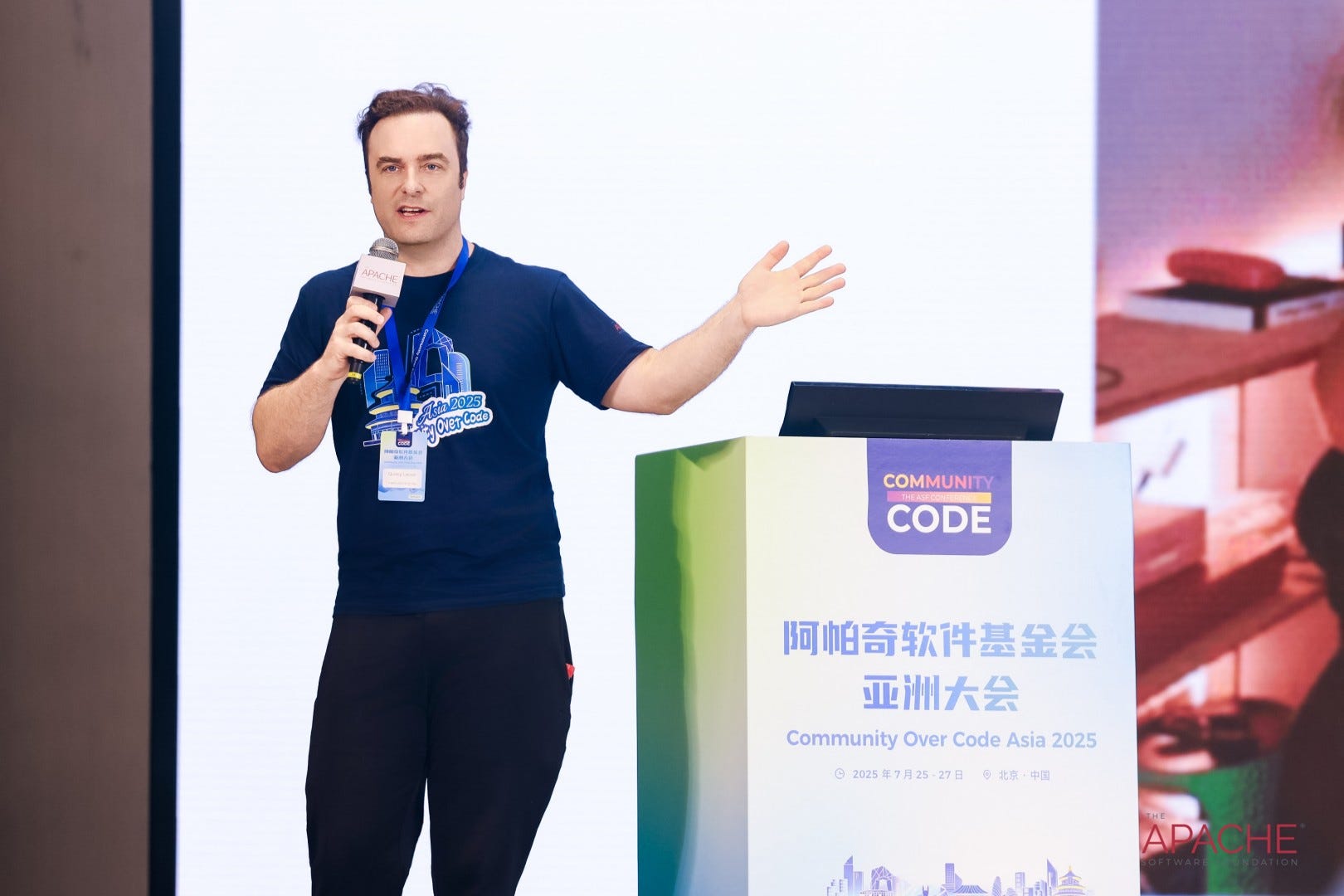
Quincy at the ASF’s “Community Over Code Asia 2025”
I know it’s a very long answer to the question, but I think that if you think of open source as kind of like, it eventually catches up with the state of the art, and then the state of the art is open source. And so there will be this pioneering edge that’s slightly better than open source. But once open source is good enough, then most people will just switch to open source. And we’ve seen that with Linux. We’ve seen that with a lot of the Apache Software Foundation tools. And we’re going to be seeing that with open source education products. I think more schools will switch to open source, Creative Commons–licensed textbooks, for example, more people that are self teaching will switch to free open source learning resources like freeCodeCamp.
Alex: I think that’s great. And that would be very beneficial to people with limited resources. People can get courses for free.
Quincy: Yes.
Alex: Our final question is also about open source and here it is: with the growing tension between the US and China, do you think this is having an impact on the development of open source projects? How might the competition affect collaboration?
Quincy: I think in science and probably in open source development, governments may fight over whatever. But at the end of the day like everyday people that are working on the problem, they’re going to probably collaborate. It might slow progress a little bit. There might be fewer conferences where you have Americans attending Chinese conferences or Chinese attending American conferences. Maybe there will be visa issues and things like that. Maybe there will be issues where the government steps in and says this needs security. This seems to be classified or we can’t have this technology transferred to the other nation, and that could come from either side.
I don’t think that’s going to have a significant impact on education. I think developer education is generally seen as a universal good thing. It could be like the sort of stuff that freeCodeCamp is working with, like basic skills. People are taking these basic skills and learning on freeCodeCamp, and maybe adding some more advanced skills. But generally, you’re not going to go from going through freeCodeCamp to being one of those researchers that get $100 million to work at Meta, right? That’s like Mark Zuckerberg is literally giving people $100 million, if they’re top AI researchers and those people are probably not going to freeCodeCamp, frankly, and they’re probably not using open source. They probably studied under some very famous professor at some very prestigious university, and worked very hard on the PhD for like 10 years. Those are the types of people that I think are going to be more restricted. By the time things reach open source, for the most part, they’re already ubiquitous enough that the government is not going to try to step in and control it.
So I don’t anticipate it having a huge impact on open source. I think with pioneering foundation models and things like that, maybe that’ll have an impact, but I I don’t think it’s going to have an impact on most of us. I think it’s probably just a subsection of people that are working on things that are perceived to be important from a military perspective or a very specific economic aspect.
I’m speaking very much outside of my expertise. And it’s also important to note that freeCodeCamp is a charity. We’re completely impolitical. You’ll never hear us talk about politics, and that includes geopolitics between the US and China. But that is just my quick vibe on what is likely to happen in terms of open source. I don’t think a lot is going to happen.
Alex: I think that’s a great answer. Thank you. Thank you so much for taking your time to join our interview.
Quincy: Thank you. Excellent interview, Alex.
Richard: We’re really thrilled to have had Quincy with us today sharing his incredible journey and insights. For developers in China who want to keep the conversation going, you can follow him on X (@ossia) or dive into freeCodeCamp’s resources online (https://www.freecodecamp.org/). Like he said earlier, open source has no borders — it’s a global community where we can all contribute and build something amazing together.
Quincy, thank you for joining us here at ASF’s “Community Over Code Asia 2025”. It’s been such a pleasure to connect like this, and we truly hope it’s just the beginning. We look forward to welcoming you back to China soon — hopefully, even more often!
Quincy: Definitely, thank you for the opportunity.
Interviewers:
Richard Lin:
Co-founder of KAIYUANSHE (China Open Source Alliance), global open source and developer ecosystem strategist.
Alex Li:
Editor of The Nexus, passionate about exploring ideas in depth and sharing meaningful conversations and stories.